
- Fewer distractions at night give unfinished worries more room in your head.
- Stress can keep your body alert right when it should be winding down.
- Getting worries out of your head and onto paper, plus a steady wind-down routine, tends to help more than trying to "just stop thinking".
Why nights feel louder
During the day, your attention is fully booked. Messages, work, classes, noise, other people. Your worries are still there, they just don't get any airtime. At night, the schedule clears. Nothing is left to compete for your attention, so the thoughts you postponed all day finally get the stage to themselves.
There is no single explanation for a busy mind at bedtime. What matters for this exercise is the pattern you can observe: which thoughts recur, what happened before them, and whether a small change helps. A quiz cannot measure your brain activity.
The ideas below are optional experiments for everyday worry, not treatment for insomnia. Persistent sleep problems deserve professional assessment. Do not use your quiz result to diagnose anxiety, infer hormone levels, or decide that a health concern is only overthinking.
Poor sleep also feeds the cycle. A rough night makes the next day more stressful, and a more stressful day makes the next night harder. That's why one bad night of overthinking can easily turn into a pattern.
Worth remembering: the problem didn't change at 2 AM. Only your energy level did. Most worries look smaller after a night's sleep and breakfast.
Rumination vs. problem-solving
Not all thinking is bad. Planning tomorrow, reflecting on a mistake, or imagining how a conversation might go can all be useful. The trouble starts when thinking turns into rumination: going over the same thought again and again without getting any closer to an answer.
Here's a simple test. After ten minutes of thinking, do you have a next step? If yes, that's problem-solving. If you're still circling the same question with the same feelings, that's a loop. Loops don't need more thinking. They need an exit.
It also helps to notice what kind of loop you're in. Some people mostly replay the past: what they said, what they should have said. Others mostly rehearse the future: what might go wrong, what someone might think. Others drift into big, abstract questions about life. Naming the loop is often the first step to stepping out of it.
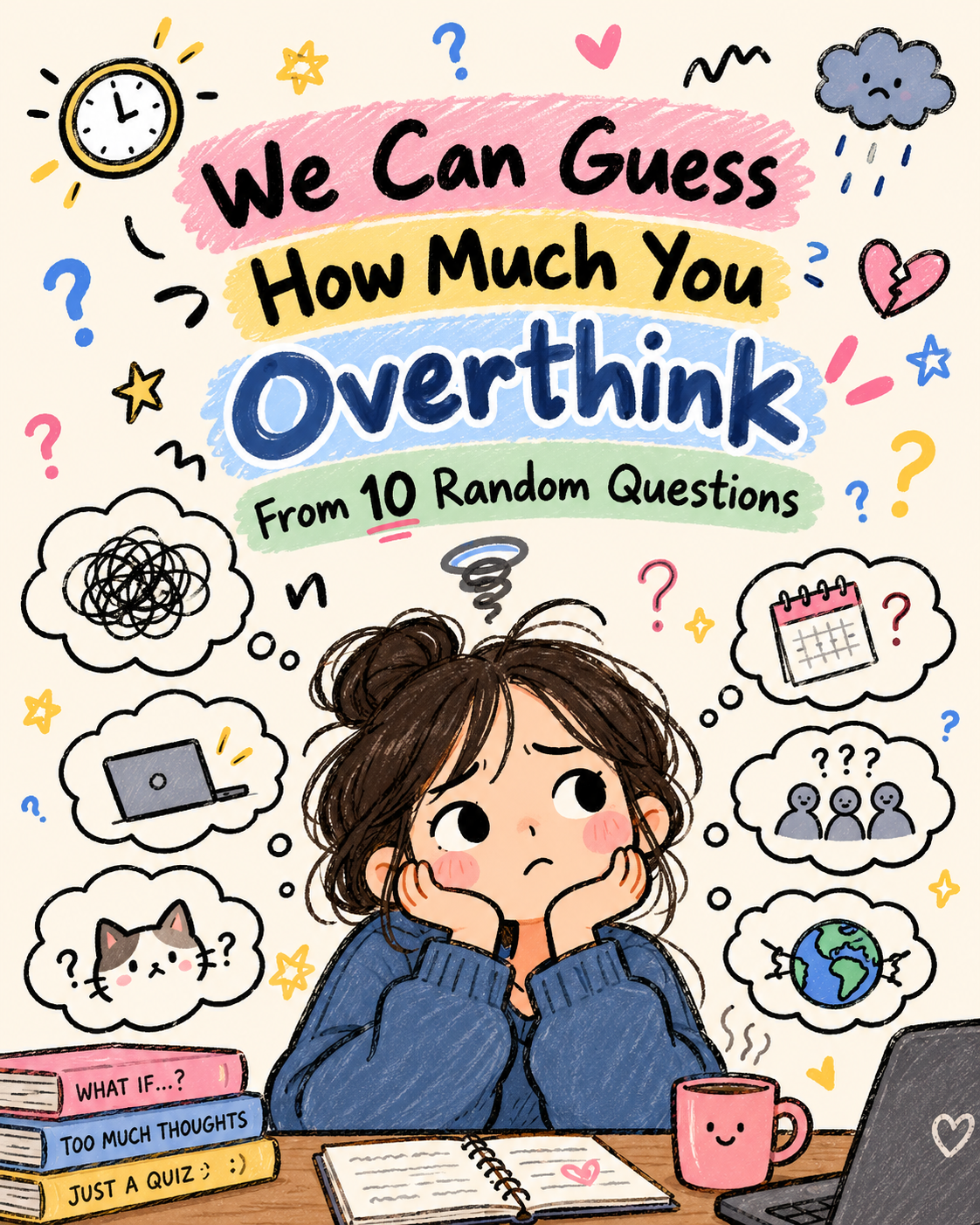
Your Brain at 2 AM: What Level Overthinker Are You?
10 everyday situations. No "do you overthink?" questions, promise. Your answers will reveal what level your brain is really running at. (Just…
Take the quiz →7 small ways to quiet it
- Write tomorrow's to-do list before bed.In a study at Baylor University, students who spent five minutes writing a to-do list for the coming days fell asleep faster than students who wrote about tasks they had already finished. Getting tasks out of your head seems to help your brain let go of them.
- Keep a "parking notebook" by your bed.When a thought shows up at night, write it down in one line and tell yourself: we'll deal with this tomorrow. Your brain often keeps repeating things because it's afraid you'll forget them.
- Give worries a daytime slot.Set 15 minutes in the afternoon as "worry time". When a worry appears at night, remind yourself it already has an appointment.
- Build a short wind-down routine.Repeat the same few steps every night, like dimming the lights, a warm shower and a few pages of a book. A predictable routine helps your body expect sleep.
- Only get into bed when you're sleepy.Lying awake for a long time gives your mind idle time to wander, and your brain starts to link your bed with thinking instead of sleeping.
- Slow your breathing.Long, slow exhales help calm your nervous system and bring your heart rate down. Try breathing in for four counts and out for six.
- If you can't sleep, get up for a bit.Move to another room and do something calm until you feel sleepy. Changing rooms can help break the loop, and you can come back to bed fresh.
Small habits during the day
What happens at night often starts earlier. A few daytime habits make evenings quieter:
- Close open loops early. Reply to the message you've been avoiding, or decide when you will. Unfinished tasks are favorite night-time topics.
- Move your body. Regular physical activity is linked to better sleep and lower stress.
- Watch late caffeine and late screens. Both can keep your brain in "alert mode" longer than you think.
- Ask instead of decoding. If a message worries you, a simple "hey, are we good?" during the day saves hours of guessing at night.
When to talk to someone
Overthinking now and then is very human. But if heavy thoughts keep you awake most nights, or you notice they're affecting your mood, energy or daily life, it's a good idea to talk to someone you trust or to a professional. Reaching out is a strong move, not a weak one.
FAQ
Is overthinking always bad?
No. The same habit that keeps you up can also make you thoughtful, prepared and good at noticing details. The goal is to stop the loops, not your brain.
Why do embarrassing memories show up at night?
With fewer distractions and a tired brain, old emotional memories get more attention. Writing them down with a one-line lesson can help close the loop.
Does scrolling help me fall asleep?
Usually the opposite. New messages and posts give your mind fresh material to think about. Try putting the phone out of reach.
How long does it take for these habits to work?
Some, like the to-do list, can help the same night. Routines usually need a week or two of consistency before they feel automatic.
A five-minute parking exercise
Before bedtime, write one unfinished task, its next action and when you will revisit it. Stop after five minutes. This is a way to organize a task, not a test of whether you can force yourself to sleep.
Research informs the context. Quiz types and exercises are original Quizvoria editorial content, not validated assessments or study protocols. Keep your notes on your own device; these exercises do not submit answers to the site.
- Scullin, M. K., et al. (2018). Bedtime writing and difficulty falling asleep. Journal of Experimental Psychology: General, 147(1), 139–146.
- Edinger, J. D., et al. (2021). AASM clinical practice guideline: behavioral and psychological treatments for chronic insomnia in adults. Journal of Clinical Sleep Medicine, 17(2), 255–262.


Comments 0
Log in to comment